25 Years On: 9/11 Legacy Continues to Shape US Security & Society
As the 25th anniversary of 9/11 approaches, the attacks' profound impact on US airport security, intelligence gathering, and the lives of countless Americans continues to be examined.
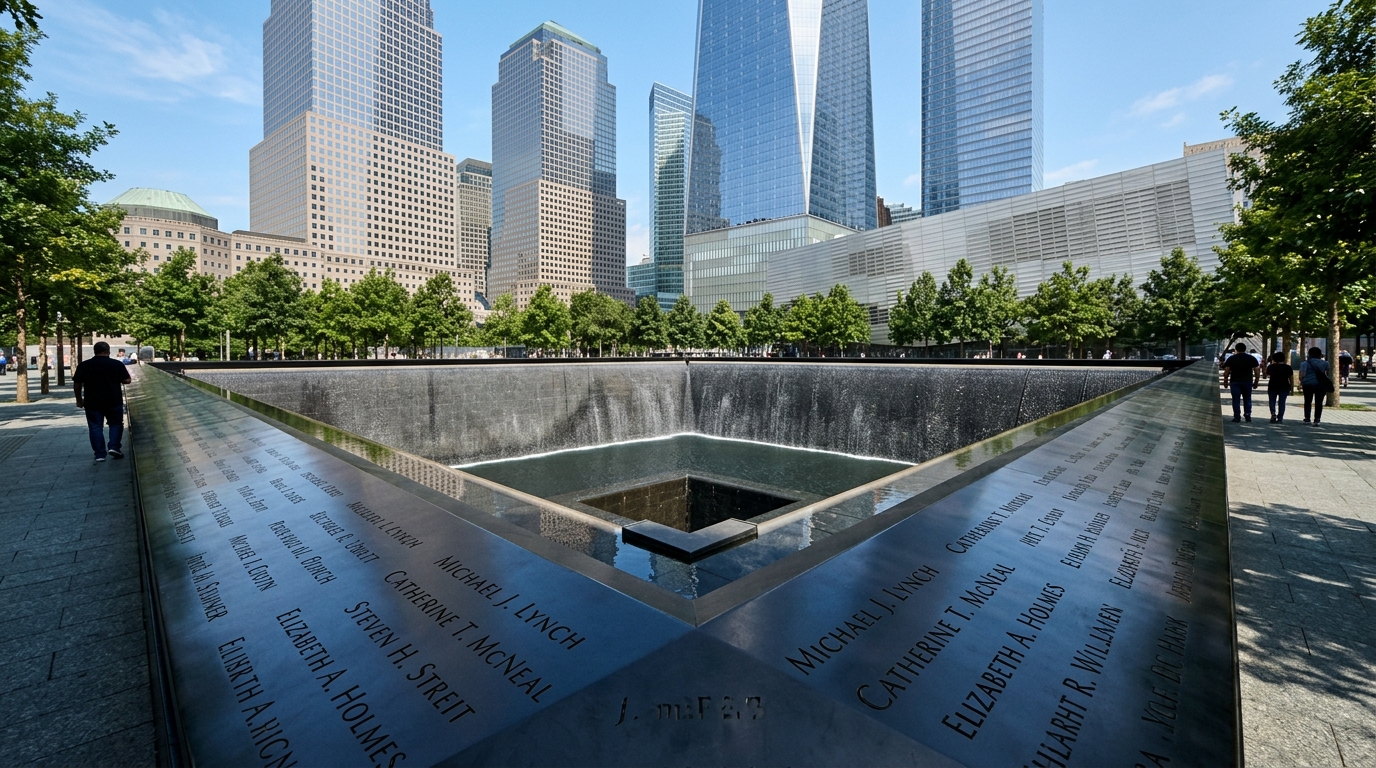
Image is an AI-generated illustration, not a real photograph.
As the United States commemorates the 25th anniversary of the September 11th terrorist attacks, the profound legacy of that day continues to shape the nation's security apparatus and societal fabric. Immediately following the attacks, the U.S. implemented sweeping changes to aviation security, most notably establishing the Transportation Security Administration (TSA) to federalize airport screenings, which had previously been handled by private contractors. This led to significantly enhanced passenger and baggage screening protocols, including advanced scanners and a ban on knives from aircraft cabins. Concurrently, intelligence gathering underwent a major overhaul, with the Department of Justice and the broader intelligence community reorganizing to improve collaboration between law enforcement and intelligence agencies and to develop new tools for thwarting terror plots.
Over the past quarter-century, airport security has evolved further, incorporating technologies like facial recognition for expedited screening while adapting to new threats such as drones and cyberattacks. The intelligence community's focus remains on preventing terrorism, but it is also expanding to address emerging challenges like foreign interference and artificial intelligence capabilities. These enduring security measures reflect a persistent effort to balance safety with civil liberties, a challenge that arose immediately after 9/11 with the passage of acts like the Patriot Act and the creation of the Department of Homeland Security.
Beyond security, 9/11 profoundly impacted American society, fostering an initial period of national unity and patriotism that later gave way to debates over government surveillance and concerns about Islamophobia. The attacks also reshaped U.S. foreign policy, initiating prolonged military engagements in Afghanistan and Iraq. Twenty-five years later, many Americans still vividly recall the events of that day, recognizing it as a pivotal historical moment, even as a new generation learns about 9/11 primarily through education and historical accounts.
What each outlet emphasizes
- BBC: Focuses on lessons learned, changes in airport security, and the ongoing quest to identify remains
- The Guardian: Highlights victim families' calls for accountability and how 9/11 changed Americans' lives
Read it at the source
msudenver.edu ↗ cbsnews.com ↗ forbes.com ↗ rand.org ↗ justice.gov ↗