AI Deciphers Ancient Scroll, While New Models Spark Cybersecurity Concerns
AI has successfully deciphered a papyrus scroll burnt in Vesuvius, even as concerns about cybersecurity prompt limited release of new AI models.
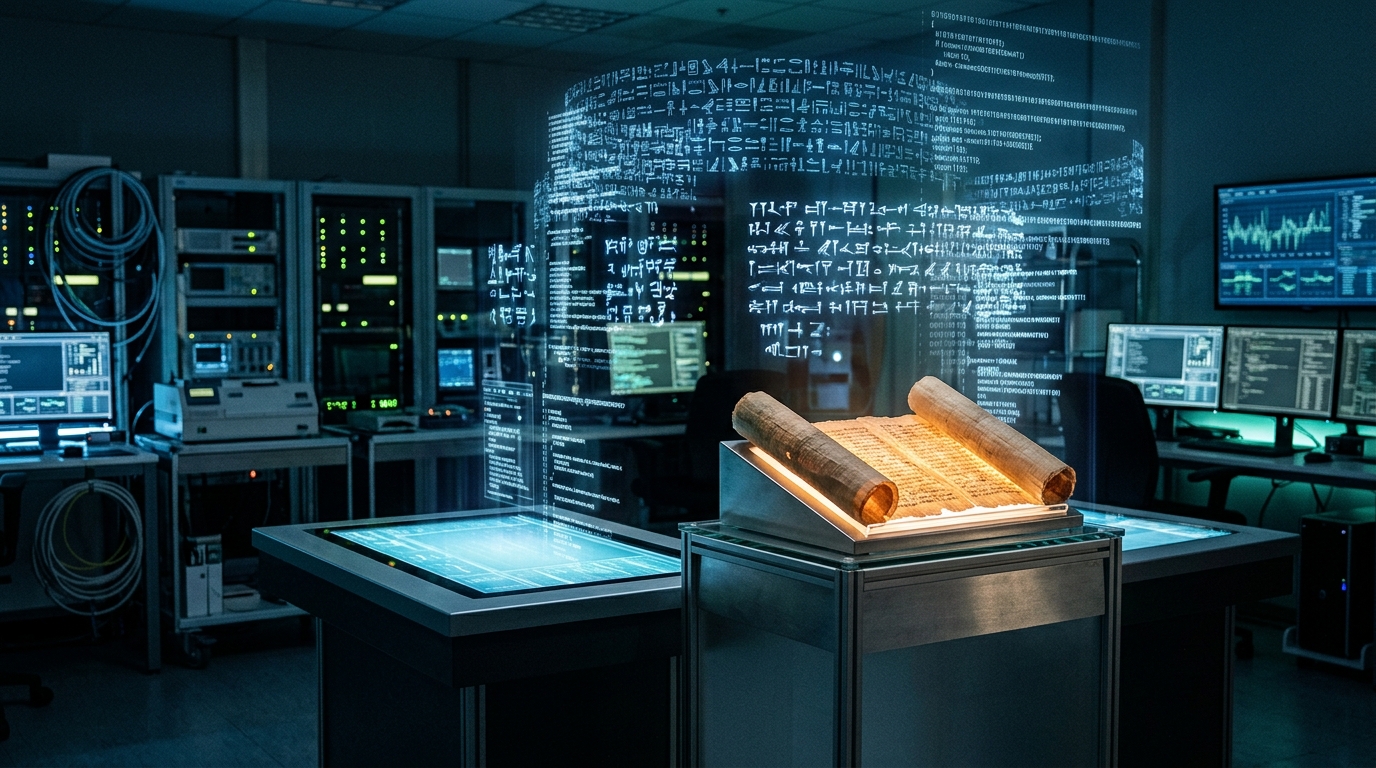
Image is an AI-generated illustration, not a real photograph.
Artificial intelligence recently achieved a significant milestone by successfully deciphering ancient papyrus scrolls, charred by the Vesuvius eruption in 79 A.D., that have remained unreadable for nearly two millennia. Researchers, primarily from a University of Kentucky project within the Vesuvius Challenge, utilized advanced AI and imaging techniques to virtually unwrap and read complete texts from the fragile Herculaneum scrolls, revealing new insights into ancient Greek and Roman philosophy. This breakthrough represents a major step in accessing invaluable historical documents without physical damage.
Concurrently, the rapid advancement of powerful new AI models is escalating cybersecurity concerns, prompting governmental bodies to implement restrictive measures on their release. The U.S. government, specifically the Trump administration, has requested that companies like OpenAI limit access to their latest models, such as GPT-5.6 Sol, to a vetted group of users due to potential national security risks. Anthropic's Mythos 5 model, initially restricted due to its ability to identify deep software vulnerabilities, has now been allowed a limited release to U.S. organizations tasked with cybersecurity defense and critical infrastructure protection, highlighting a delicate balance between technological progress and mitigating escalating cyber threats.
What each outlet emphasizes
- CNN: reports on Papyrus scroll deciphered with AI and US government allowing Anthropic limited release of AI model
- AP: mentions OpenAI and Anthropic limiting new AI models to Trump-approved customers during cybersecurity review
Read it at the source
cbsnews.com ↗ greekreporter.com ↗ theguardian.com ↗ kvia.com ↗ sitkasentinel.com ↗