Astronomers detect sugar molecules in interstellar space, a sweet cosmic discovery
Astronomers have made a groundbreaking discovery, detecting sugar molecules, similar to those found in raspberries, in the vast expanse of interstellar space.
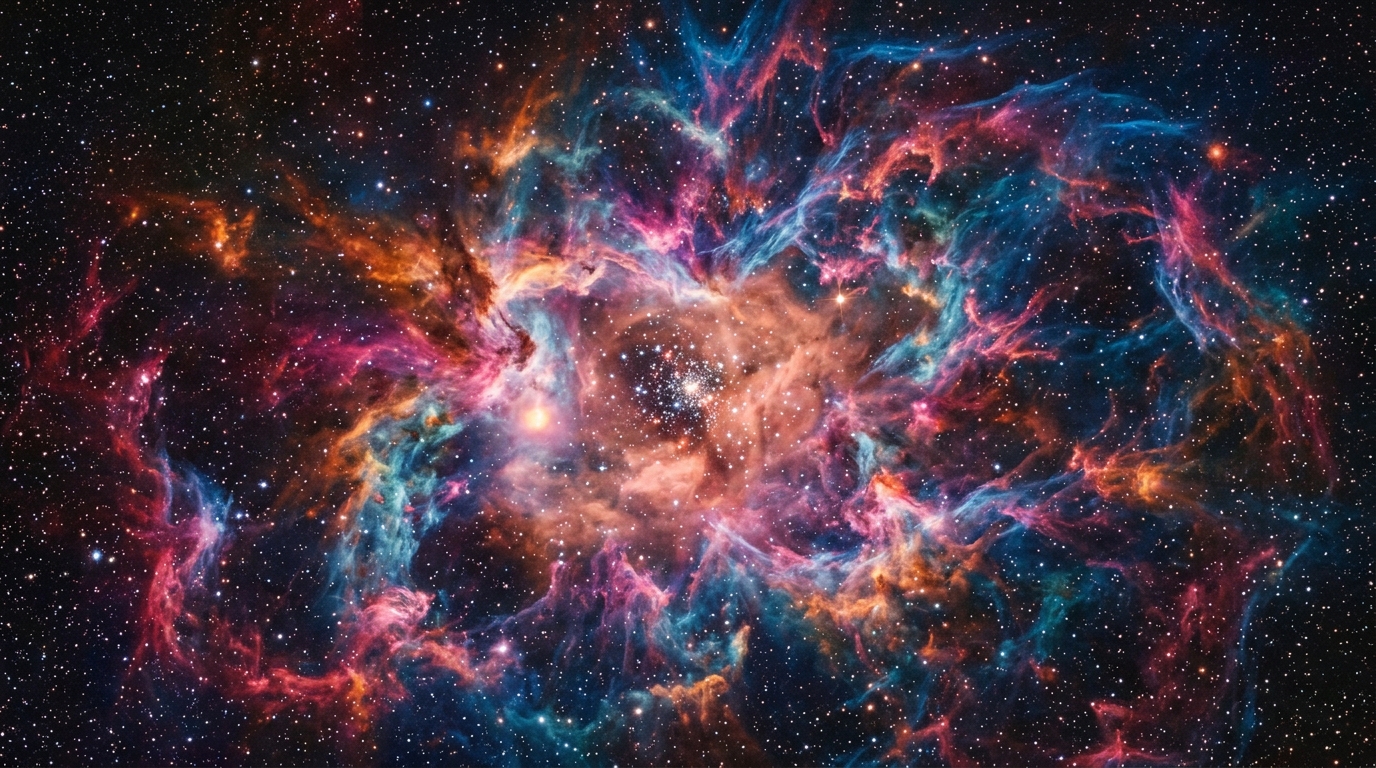
Image is an AI-generated illustration, not a real photograph.
Astronomers have recently made a groundbreaking discovery, identifying sugar molecules in interstellar space for the first time. An international team, led by Izaskun Jiménez-Serra from the Centro de Astrobiología in Spain, utilized the Yebes 40-m and IRAM 30-m radio telescopes to detect erythrulose, a four-carbon sugar, within the molecular cloud G+0.693−0.027 near the Milky Way's center. This marks the first direct detection of such a complex sugar molecule in the vastness of space, differentiating it from earlier findings of simpler sugars like glycolaldehyde or sugars found in meteorites.
The detection of erythrulose, which on Earth is found in raspberries, challenges existing theories about how molecules grow in interstellar environments. It represents the largest non-cyclic molecule and the first with four oxygen atoms identified in the interstellar medium so far. This significant finding implies that the chemical building blocks essential for life may form in space long before planets develop, suggesting that Earth's initial sugar inventory could have arrived from cosmic sources.
This "sweet discovery" has profound implications for understanding the origin of life, opening new avenues for searching for other complex sugars, including ribose, which is a crucial component of RNA. Researchers hope to conduct further studies to explore the presence of additional life-enabling molecules, thereby enhancing our knowledge of prebiotic chemistry beyond Earth.
What each outlet emphasizes
- CNN: Sugar found in raspberries detected in interstellar space
- AP: Dulce hallazgo: astrónomos encuentran azúcar en el espacio entre las estrellas
Read it at the source
sci.news ↗ skyatnightmagazine.com ↗ gizmodo.com ↗ iheart.com ↗ popsci.com ↗