US-China race for data centers intensifies as AI supercharges global security threats
The US and China are in a fierce competition over data center development, while security chiefs warn that AI is amplifying national security threats globally.
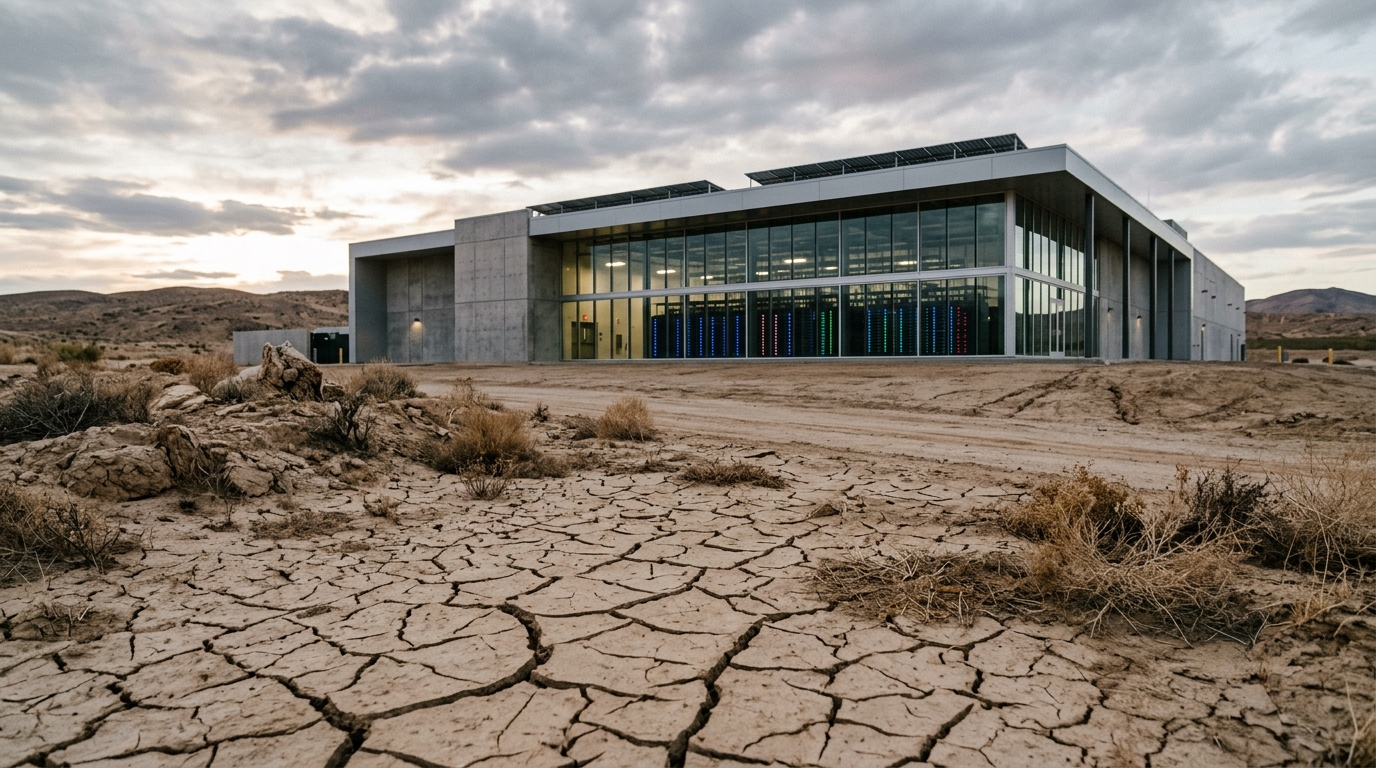
Image is an AI-generated illustration, not a real photograph.
The United States and China are engaged in an accelerating global competition to construct data centers, primarily driven by the race for artificial intelligence leadership. While the U.S. maintains a lead in overall computing capacity, leveraging its advanced AI firms and significant capital investment, China is rapidly expanding its infrastructure with large-scale, government-backed initiatives, including a $560 billion plan for computing systems and nearly 90 planned data centers in Inner Mongolia alone. However, U.S. export restrictions continue to limit China's access to advanced AI chips, creating a challenge for Chinese computing capabilities. This rivalry underscores a new geopolitical reality where access to digital infrastructure is as strategically vital as traditional resources.
Beyond this strategic competition, global internet infrastructure faces increasing threats from various conflicts and malicious actors. Data centers are vulnerable to a spectrum of cyberattacks, including ransomware, distributed denial-of-service (DDoS) attacks, and sophisticated AI-powered threats. Geopolitical tensions have led to simultaneous kinetic and cyber operations, as demonstrated by drone strikes in March 2026 on Amazon Web Services data centers in the UAE and Bahrain, causing service disruptions. Nation-state actors, particularly from Russia, China, Iran, and North Korea, are actively targeting critical infrastructure globally, from telecommunications and energy to water systems. Despite these escalating dangers, there remains an absence of adequate international legal frameworks to safeguard these essential digital amenities.
Furthermore, the environmental impact of this data center expansion poses significant concerns. Driven largely by the demands of artificial intelligence, the energy and water consumption of data centers is projected to double by 2030. This massive demand places considerable strain on local power grids and water supplies, contributing to rising utility costs and generating growing community opposition, particularly in the United States. By 2030, the electricity usage of global data centers could rank sixth-highest if compared to national consumption, leading to substantial carbon dioxide emissions and a projected 2.5 million tonnes of e-waste annually.
What each outlet emphasizes
- CNN: emphasizes US-China competition in data center construction and UK warnings on AI threats
- BBC: touches on data centers' impact on local resources and potential use in cyber warfare
- AJ: highlights how Middle East conflict threatens data centers and internet cables
- The Guardian: warns of AI share crash risk to financial stability and UK MI5 chief's terror warnings
Read it at the source
kmjnow.com ↗ geopoliticalfutures.com ↗ instagram.com ↗ brookings.edu ↗ encoradvisors.com ↗