Iran warns of retaliation as Trump admin sends Saudi nuclear deal to Congress
Iran warns of retaliation against Trump's economic "D-Day" sanctions, as the Trump administration advances a Saudi nuclear deal that includes an enrichment pathway.
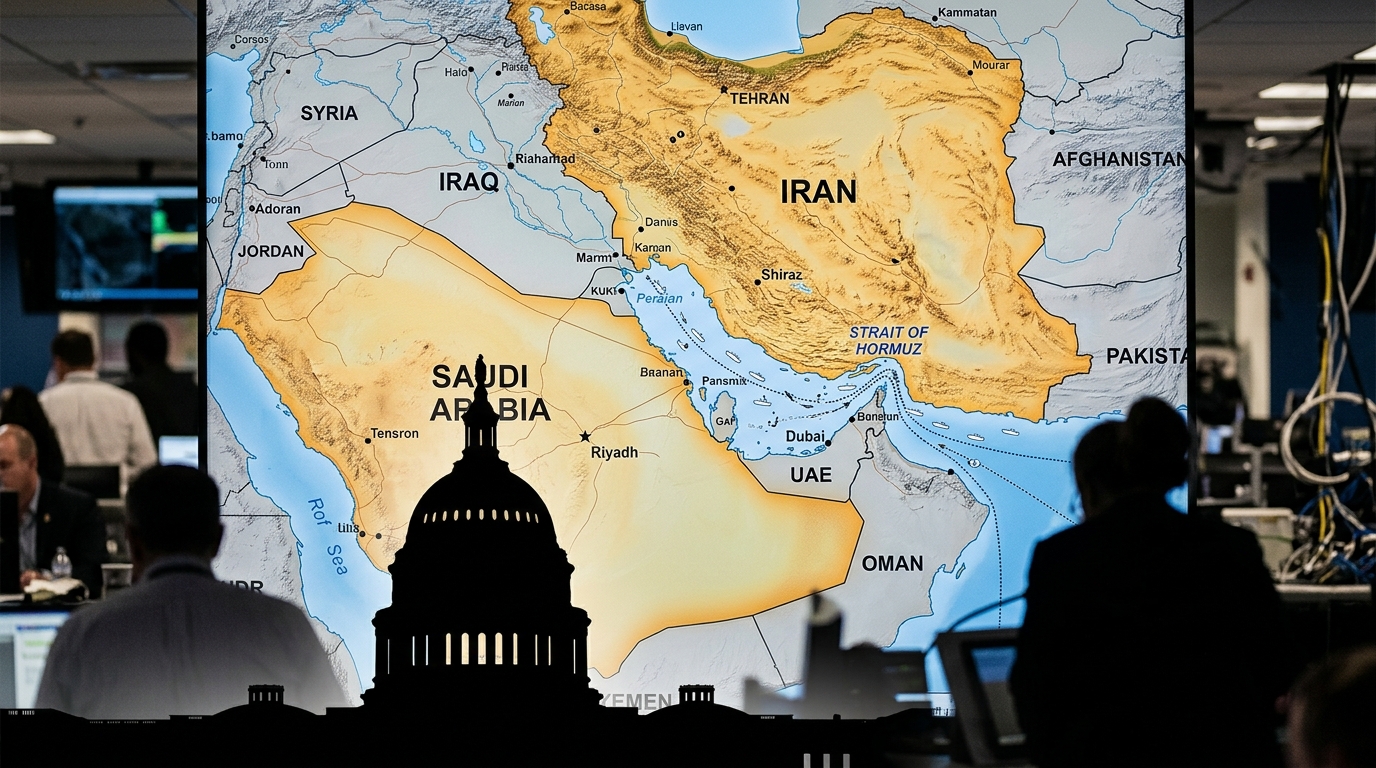
Image is an AI-generated illustration, not a real photograph.
Tensions between the United States and Iran have recently escalated, marked by a new wave of economic sanctions from Washington and continued military posturing. On August 24, 2026, the U.S. Treasury Department initiated "Operation Economic Outcast," significantly broadening sanctions to target sectors like digital assets, technology, gold, aviation, and shipping, aiming to severely restrict Iran's financial lifelines. These measures, which also threaten secondary sanctions on foreign entities doing business with Iran, follow earlier sanctions in February 2026 and coincide with the expiration of a temporary waiver on Iranian oil exports. Iran has condemned these actions, warning of "devastating responses" to new threats and calling for the United Nations to condemn the U.S. sanctions.
The current escalation follows a period of significant military activity, including a major U.S. military buildup in the Middle East in early 2026—the largest since the 2003 Iraq invasion—which culminated in joint U.S.-Israeli strikes on Iran on February 28, 2026, leading to what is referred to as the 2026 Iran war. Although a ceasefire was established in June 2026, the U.S. maintains a military deterrence in the region, while Iran has responded to hostilities by launching retaliatory missile and drone strikes and repeatedly threatening or attacking vessels in the Strait of Hormuz, seeking to assert control over the vital waterway.
Adding another layer of complexity, the U.S. has approved a civilian nuclear deal with Saudi Arabia, prompting strong criticism from Iran. Iranian officials view this agreement as a demonstration of U.S. double standards, questioning why Saudi Arabia is permitted a nuclear program while Iran's is met with severe international restrictions. Saudi Arabia has explicitly stated its intention to pursue nuclear weapon capabilities if Iran does, linking its nuclear ambitions directly to the situation with Tehran and raising concerns about regional proliferation. This contentious Saudi deal, debated in the U.S. Congress, is seen by some as potentially giving Iran additional leverage in future negotiations.
What each outlet emphasizes
- CNN: reports on Iran's retaliation threat and the USS Theodore Roosevelt's deployment, as well as the Saudi nuclear deal
- AJ: emphasizes Iran's stance on self-sufficiency, calls for Muslim unity, and the impact of sanctions
- AP: reports on Iran's warning of a military ship ban in Hormuz and other Middle East news
Read it at the source
cfr.org ↗ thompsonhinesmartrade.com ↗ hklaw.com ↗ treasury.gov ↗ wikipedia.org ↗