Iran Nuclear Deal Talks Face Uncertainty Amidst Sanctions and Hormuz Standoff
Despite reports of Iran being ready to discuss a nuclear deal, Tehran has declared peace talks over, while the Strait of Hormuz remains choked off and US sanctions persist.
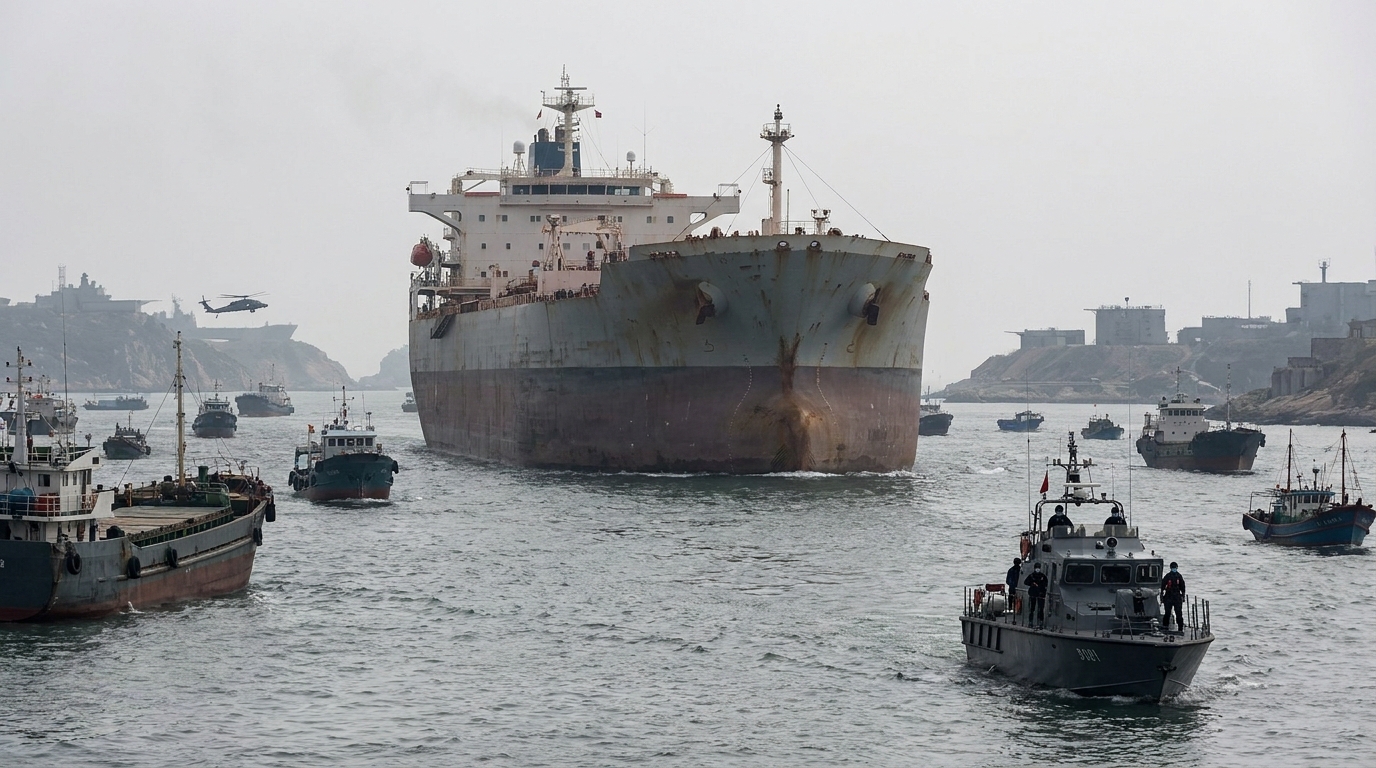
Image is an AI-generated illustration, not a real photograph.
Iran's nuclear negotiations are currently shrouded in significant uncertainty, with conflicting reports emerging from both Washington and Tehran regarding their progress and immediate future. While U.S. Secretary of State Marco Rubio has expressed guarded optimism about Iran's willingness to discuss previously unaddressed nuclear issues, President Trump's assertions of an imminent peace agreement are countered by Iranian officials who caution that a deal is not close, emphasizing that current discussions primarily aim to end the ongoing conflict rather than detail nuclear specifics. Adding to the complexity, Iran reportedly suspended negotiations on June 1st in response to U.S. amendments to a draft understanding and Israeli military actions in Lebanon.
This diplomatic deadlock occurs against the backdrop of the critical Strait of Hormuz remaining largely impassable since the outbreak of the 2026 Iran-U.S.-Israel conflict in late February. Iran's closure of this vital waterway, a retaliatory measure, has severely disrupted global oil and gas shipments, leading to a worldwide fuel crisis and substantial economic ramifications. The U.S. views the reopening of the strait as a prerequisite for any further talks, while Iran leverages its control over the passage as a key bargaining chip in negotiations to alleviate sanctions and end the conflict.
Further complicating the path to a resolution are persistent U.S. sanctions, with recent tentative agreements on a ceasefire that would involve a gradual lifting of naval blockades and some sanctions relief remaining unapproved by President Trump. Notably, the U.S. Treasury Department has simultaneously imposed additional sanctions, highlighting the deep mistrust and differing objectives between the parties. International Atomic Energy Agency (IAEA) Director General Rafael Grossi has underscored that Iran's advanced nuclear capabilities mean the 2015 nuclear deal is no longer a viable framework, necessitating a fundamentally different approach for any future agreement.
What each outlet emphasizes
- CNN: highlights the 94 days of paralysis in the Strait of Hormuz and its strategic importance.
- BBC: reports on the US firing a missile at an Iran-bound oil tanker and the White House pushing for a deal.
- AJ: quotes Rubio stating US will not remove sanctions even if Hormuz reopens and mentions Iran's supreme leader's activity.
- The Guardian: reports Rubio saying Iran is ready to discuss a nuclear deal, but Tehran declares talks over, and discusses Netanyahu's role as an obstacle.
- AP: states Iran stopped talking to mediators but Trump says talks continue, and reports on powerful Iran-backed militias handing in weapons.
Read it at the source
theguardian.com ↗ armscontrol.org ↗ 2news.com ↗ whdh.com ↗ understandingwar.org ↗