Israel’s election ends in deadlock, raising questions about next steps
Israel's recent election has resulted in a political deadlock, with no clear majority, leading to complex coalition wrangling and discussions about potential paths forward.
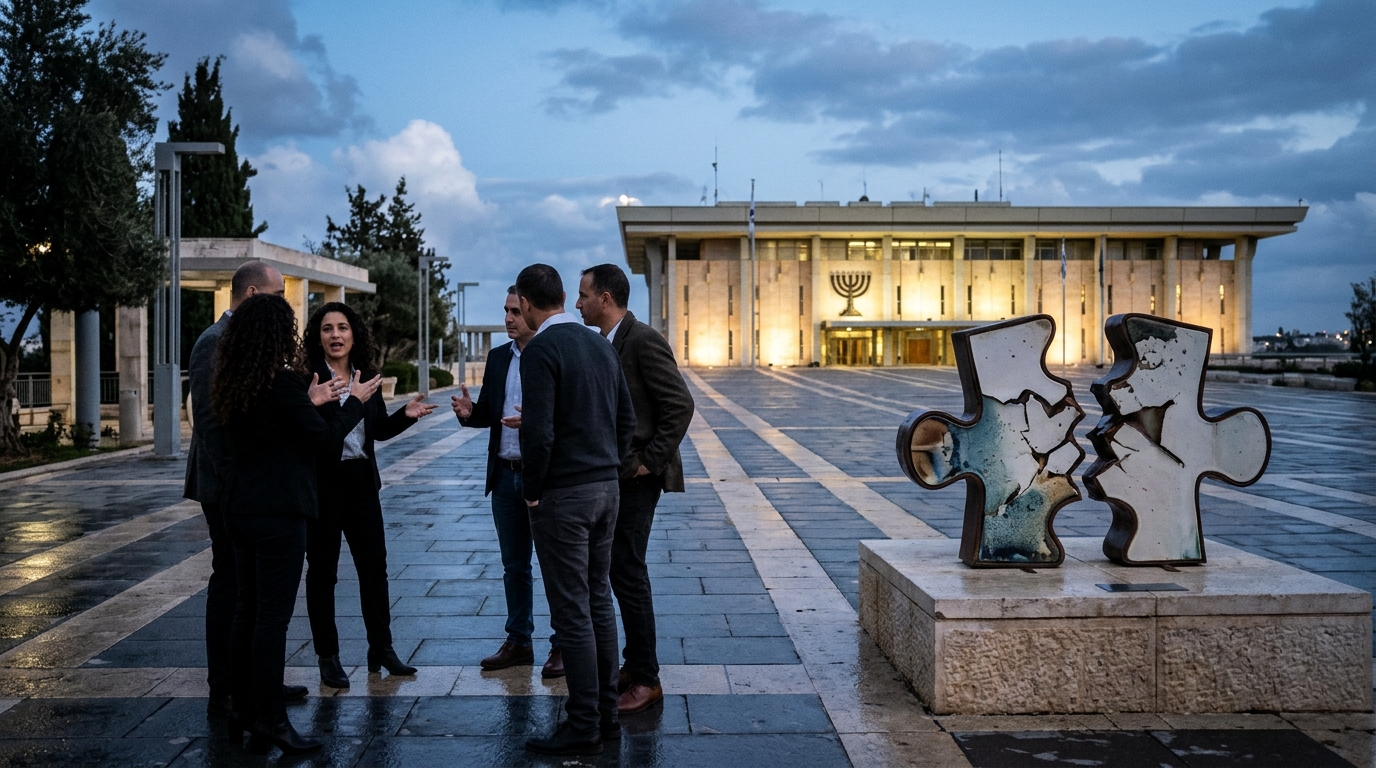
Image is an AI-generated illustration, not a real photograph.
Israel's recent election, held on October 27, 2026, concluded with no single bloc achieving the required 61-seat majority in the 120-member Knesset, leading to a political deadlock. Prime Minister Benjamin Netanyahu's bloc secured around 53 seats, while the opposition, led by figures like Gadi Eisenkot, garnered approximately 48 seats. This outcome has initiated a period of complex coalition negotiations, with the possibility of another election if a government cannot be formed.
A significant factor in the post-election landscape is the unprecedented showing by Arab-led parties, which collectively secured a historic 19 seats. This surge in Palestinian citizen turnout, often driven by frustration over domestic policies and a desire to influence the political direction, has positioned these parties as potential kingmakers. Both major blocs have historically been hesitant to include Arab parties in their coalitions, but their increased strength means any path to forming a government may now hinge on their support, either from within a coalition or as outside backers.
What each outlet emphasizes
- CNN: Israel’s election ended in deadlock, Palestinian citizens turned out to vote
- AJ: Coalition wrangling, second election, 'Arab voice doesn’t count'