Iran Declares US Will 'Inevitably Leave' Region Amid Rising Tensions and Hormuz Leverage Shifts
A top Iranian official has stated the US will "inevitably leave this region," as tensions rise and Iran's leverage in the Strait of Hormuz is debated.
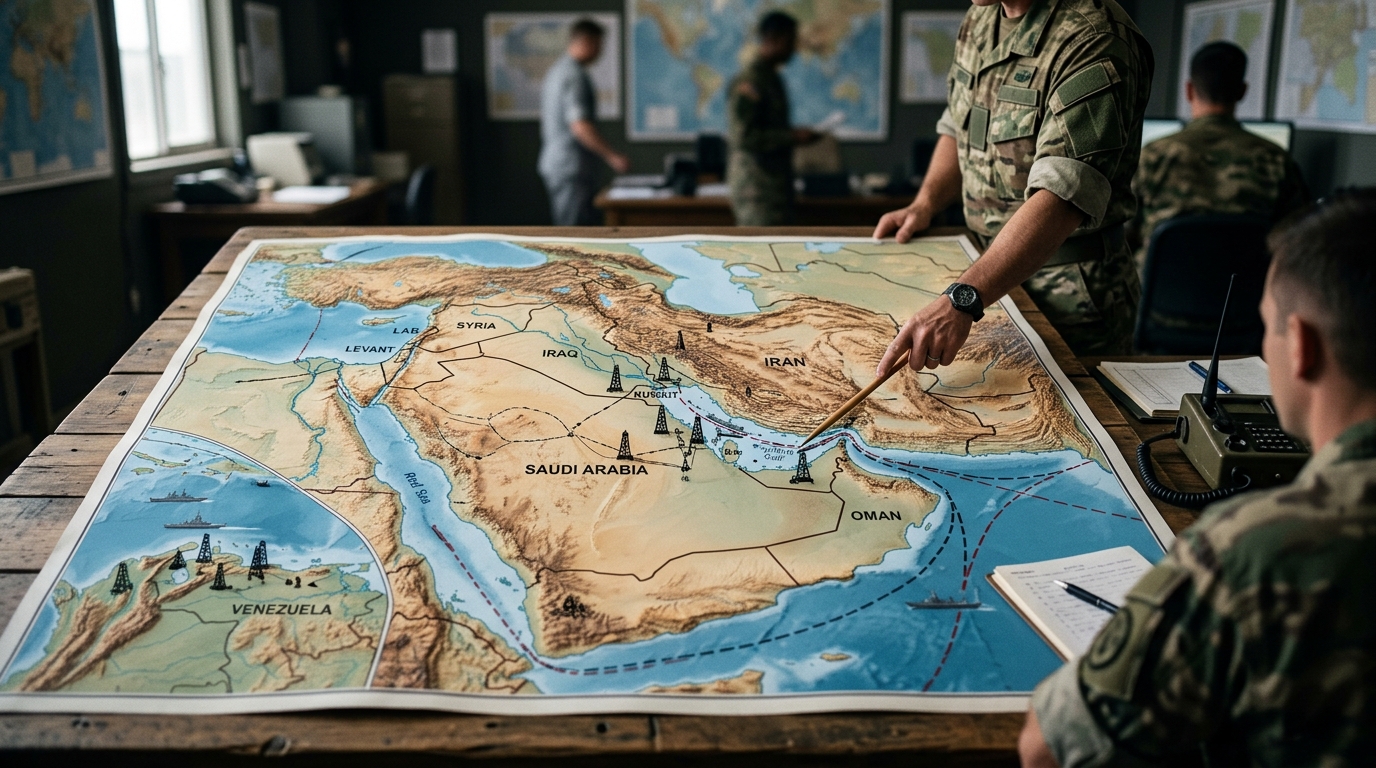
Image is an AI-generated illustration, not a real photograph.
A top Iranian official recently declared that the United States would be compelled to withdraw from the Middle East following what he described as "painful blows" sustained by American forces. On September 28, 2026, Supreme Leader Mojtaba Khamenei stated that the Arabian Sea would soon be free of a U.S. presence, a sentiment echoed by other Iranian military figures throughout the year, who asserted that the "arrogant enemy has been defeated" and must depart the region in disgrace. These pronouncements come amid heightened tensions and an ongoing conflict between the U.S. and Iran, which escalated into a broader regional war after U.S.-Israeli strikes on Iran in late February 2026.
Central to this dynamic is Iran's strategic leverage over the Strait of Hormuz, which it has blockaded since the war's outset. Iranian officials view control over this vital waterway as a crucial deterrent and a means to reshape global energy security. As a precondition for lifting its blockade, Iran has demanded a seven-day ceasefire across the Middle East, including Lebanon, the unfreezing of its assets abroad, and the lifting of sanctions on its oil sector, with Foreign Minister Abbas Araghchi expecting a U.S. response via Qatari mediators by September 29, 2026.
Despite Iran's attempts to assert control, the U.S. maintains that oil flows through the Strait of Hormuz have recently increased, with daily averages nearing pre-conflict levels in late September 2026. While Iran continues to issue warnings to shipping companies, some analysts suggest that prolonged disruption of the strait could ultimately diminish Tehran's leverage by prompting countries to diversify their energy supplies. This complex situation contributes to a prolonged conflict where both sides believe they possess sufficient leverage to continue fighting.
What each outlet emphasizes
- AJ: Top Iranian official saying US will 'inevitably leave this region' and Iran downplaying Houthi role
- CNN: Analysis on Iran's lost leverage in Strait of Hormuz and Netanyahu's secret UAE visit
- BBC: Israeli settlers attacking West Bank village
Read it at the source
channelnewsasia.com ↗ iranintl.com ↗ britannica.com ↗ straitstimes.com ↗ mehrnews.com ↗