'Mogging' named Collins' word of the year, sparking debate on its origins
'Mogging,' a term with roots in online subcultures, has been named Collins English Dictionary's word of the year, sparking curiosity about its meaning and mainstream adoption.
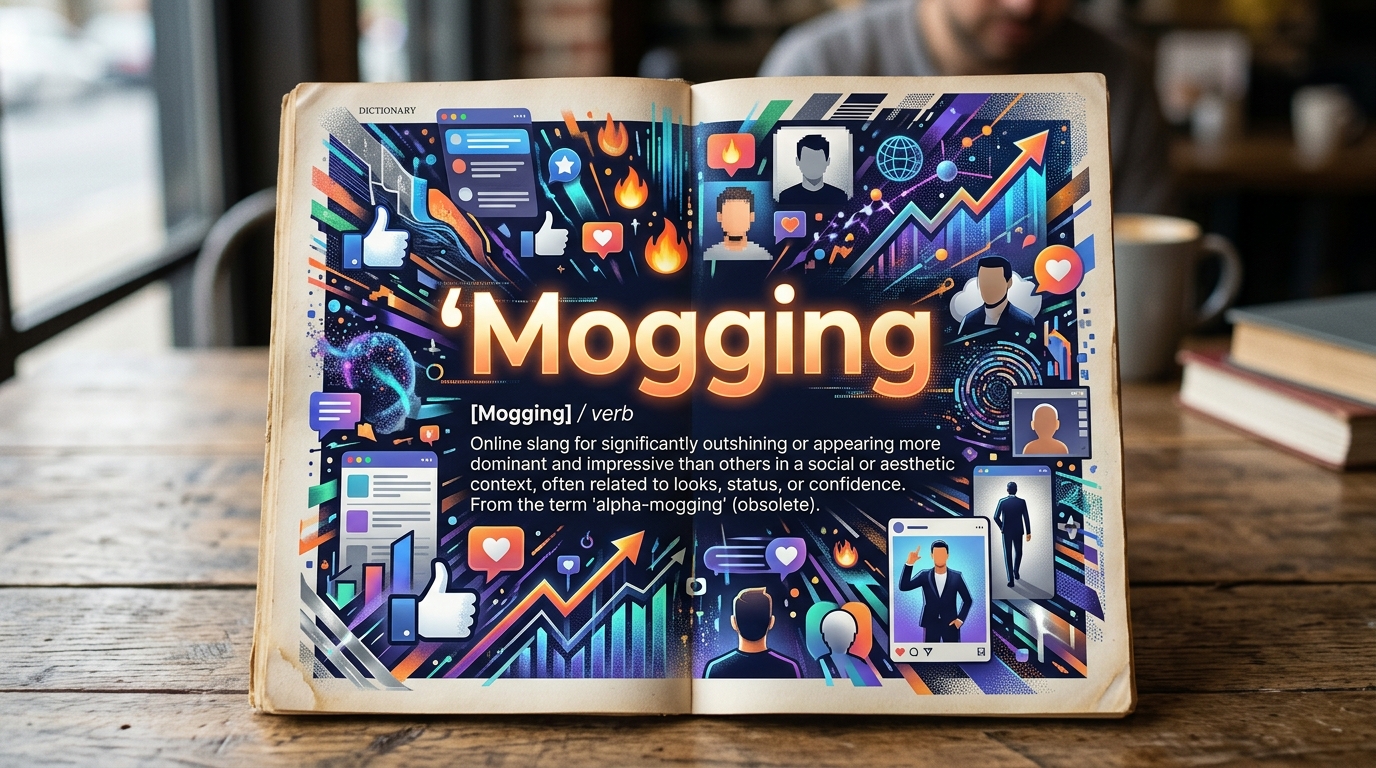
Image is an AI-generated illustration, not a real photograph.
Collins English Dictionary has designated 'mogging' as its Word of the Year for 2026, noting a remarkable 210% increase in its usage this year. The term, predominantly used by Generations Z and Alpha, describes the act of outperforming or outshining someone or something, often in a humorous or ironic manner, making another appear inferior in aspects such as appearance, confidence, or status. Collins lexicographers monitor a vast 27-billion-word database, including social media, to identify such evolving linguistic trends.
The origins of 'mogging' trace back about a decade, believed to be a shortened form of "AMOG," or "alpha male of the group." It initially emerged around 2016 within bodybuilding circles as a noun to describe the most physically dominant individual in a gym. The word subsequently evolved into a verb and gained traction in online communities, including the "manosphere" and pickup artist forums, where it carried connotations of physical one-upmanship and, at times, misogynistic undertones.
Despite its potentially problematic roots, the term has transitioned into mainstream slang, adopted playfully by younger generations who have refashioned its meaning to describe general outperformance. Collins Managing Director, Alex Beecroft, highlighted that the selection of 'mogging' demonstrates how each generation leaves a distinct mark on the English language, transforming words into their own humorous expressions.
What each outlet emphasizes
- CNN: asks what 'mogging' means after being named Collins' word of the year
- BBC: explores how 'mogging' went from a toxic term to mainstream recognition
Read it at the source
cnn.com ↗ euronews.com ↗ 1news.co.nz ↗ irishtimes.com ↗ collinsdictionary.com ↗