A 3,200-pound NASA observatory came careening back toward Earth. Here’s what to know
A 3,200-pound NASA observatory recently re-entered Earth's atmosphere, prompting questions about its trajectory and impact.
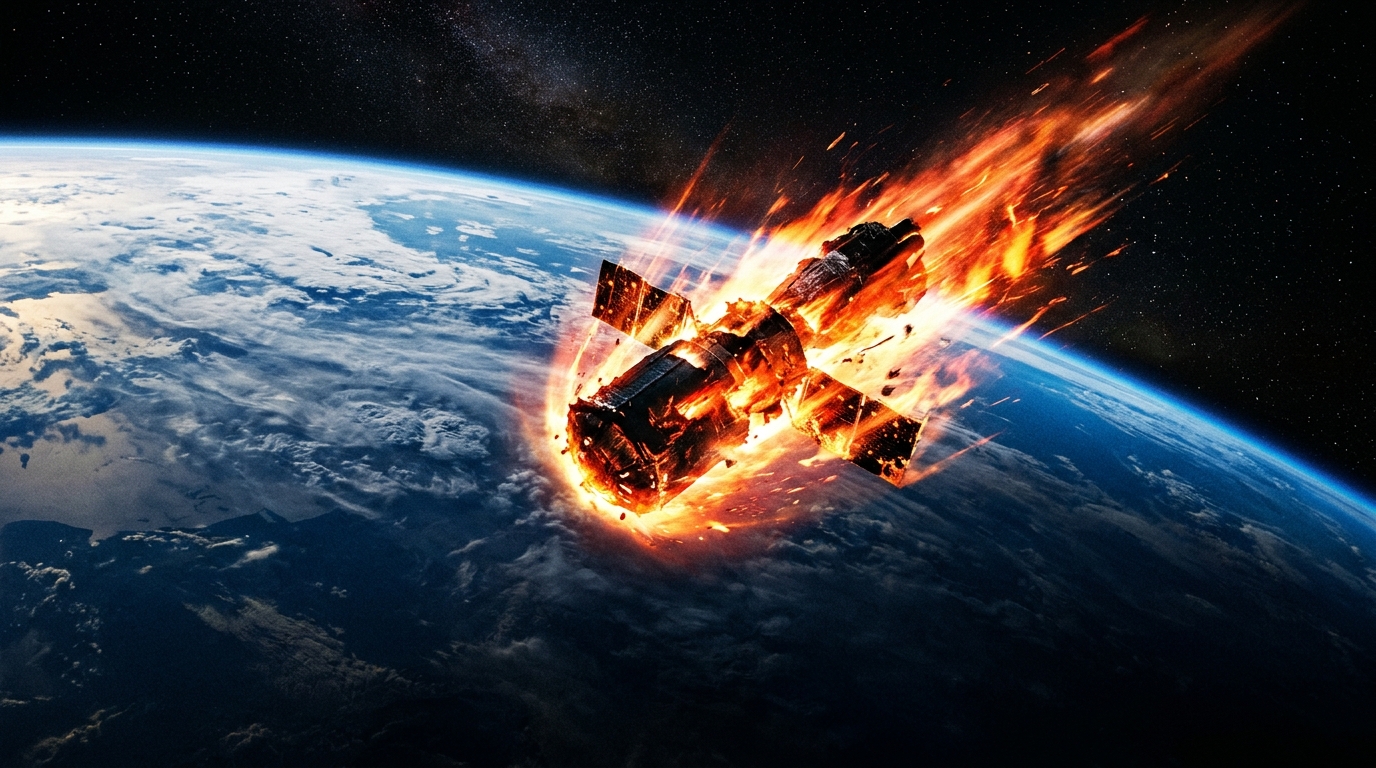
Image is an AI-generated illustration, not a real photograph.
A 3,200-pound NASA observatory, the Neil Gehrels Swift Observatory, recently re-entered Earth's atmosphere on November 4, 2026, after nearly 22 years in orbit. The telescope, launched in November 2004, was designed to study powerful cosmic explosions such as gamma-ray bursts. Its re-entry occurred over the North Sumatra region of Indonesia at approximately 7:39 a.m. ET.
While much of the observatory was expected to burn up during its descent, NASA anticipated that some components might survive re-entry. The agency had previously assessed the risk of harm to anyone on Earth as unlikely, estimating the odds at about 1 in 2,100. Both NASA and the U.S. Space Force actively tracked the observatory's re-entry path.
An attempt earlier in 2026 to extend the Swift Observatory's mission through a robotic rescue mission, aimed at boosting its orbit, ultimately failed. The re-entry of such a large, uncontrolled object highlights ongoing discussions about orbital debris and modern standards for spacecraft decommissioning, which now typically require a lower casualty risk than the Swift Observatory presented.
What each outlet emphasizes
- CNN: reports on the 3,200-pound NASA observatory's return to Earth and what to know