NASA launches urgent mission to save falling space telescope from Earth's atmosphere
NASA has initiated a critical mission to prevent a space telescope from falling back into Earth's atmosphere, despite a last-minute delay.
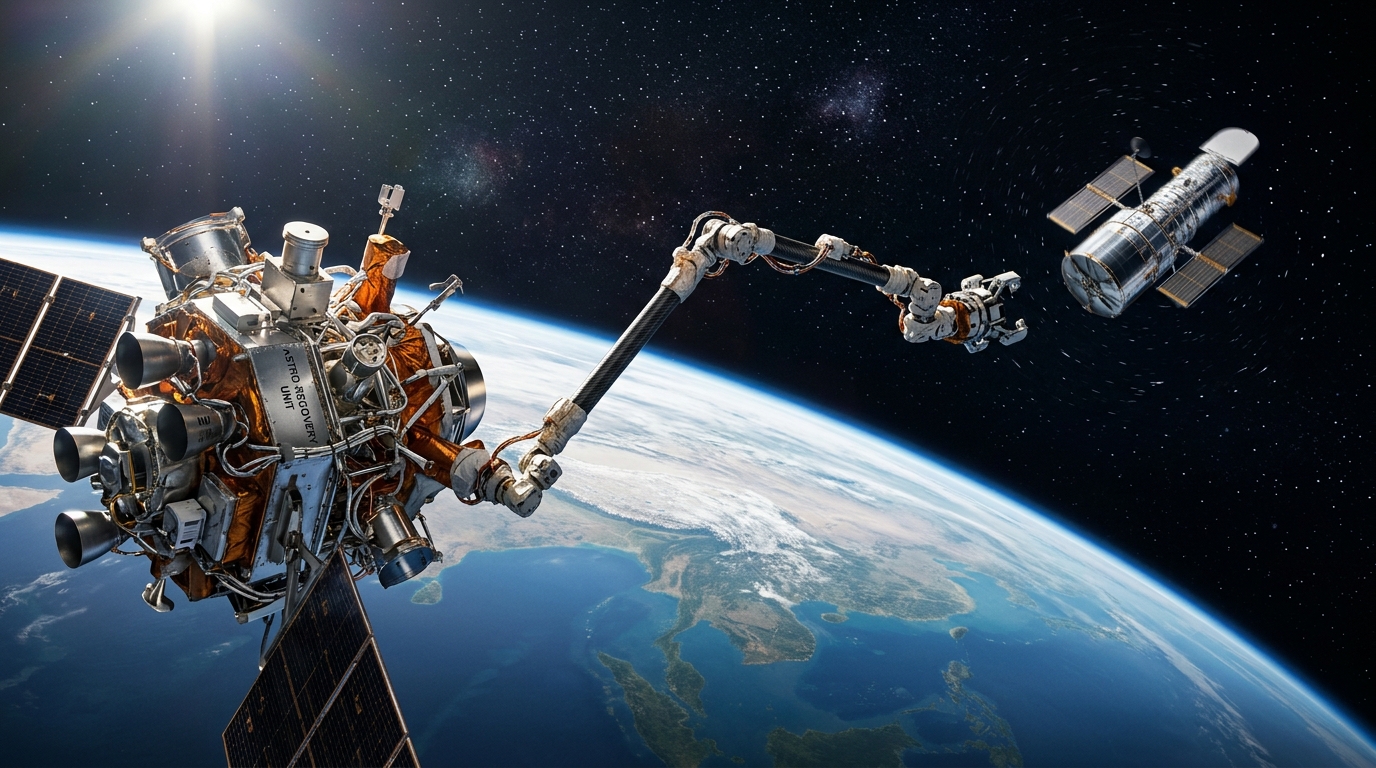
Image is an AI-generated illustration, not a real photograph.
NASA has successfully launched a groundbreaking mission to rescue its Neil Gehrels Swift Observatory, a gamma-ray space telescope, which is currently falling back towards Earth. The robotic spacecraft, named Link and developed by the private company Katalyst Space, blasted off on Friday, July 3, 2026, from the Marshall Islands. It was carried aloft by a modified L-1011 airliner before a Pegasus XL rocket launched it into orbit.
The Swift Observatory, operational since 2004, is experiencing an accelerated orbital decay due to increased atmospheric drag caused by heightened solar activity. Scientists predict that without intervention, the scientifically valuable telescope will re-enter Earth's atmosphere and be destroyed by October of this year. The urgent, $30 million mission aims to extend the telescope's operational life.
Upon rendezvous, Link will use its robotic arms to secure the Swift Observatory and then employ its thrusters to carefully elevate the telescope to a higher, more stable orbit. This complex process is anticipated to take several months. This daring endeavor represents a significant first for the U.S. in robotic satellite servicing and holds the potential to revolutionize how aging space assets are managed.
What each outlet emphasizes
- BBC: states Nasa launches mission to save falling space telescope.
- AP: reports on the rescue mission launch to save the NASA telescope falling back to Earth, and mentions a last-minute problem delaying the satellite rescue mission.
Read it at the source
livescience.com ↗ space.com ↗ pbs.org ↗ gulfnews.com ↗ sciencenews.org ↗