Devastating Floods in Nepal Leave Hundreds Dead, US Aid Response Under Scrutiny
Catastrophic floods have ravaged Nepal, claiming hundreds of lives and leaving widespread destruction, prompting questions about the adequacy of international aid, including US contributions.
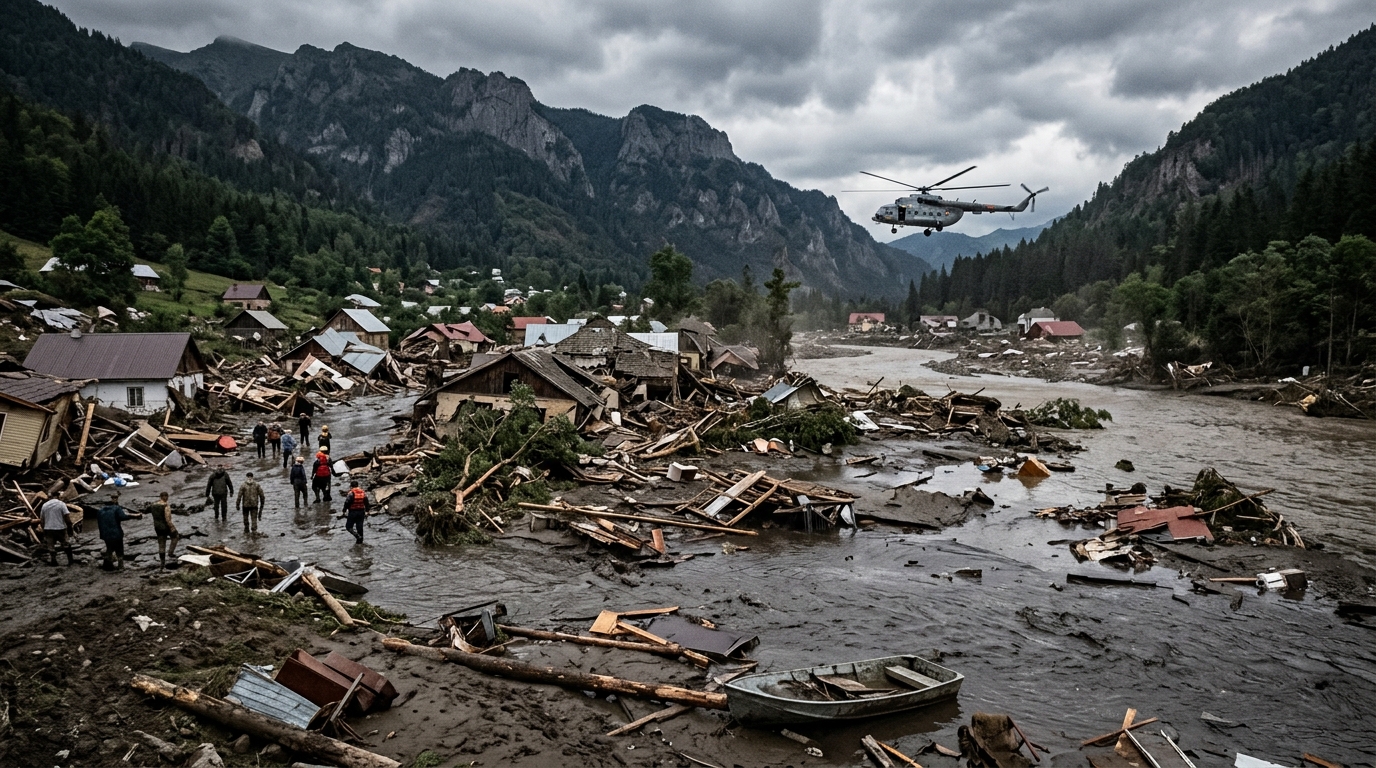
Image is an AI-generated illustration, not a real photograph.
Devastating flash floods, triggered by a glacier collapse and landslide on the China-Nepal border on August 26, 2026, have ravaged Nepal, resulting in a catastrophic loss of life and widespread destruction. The confirmed death toll in Nepal has surpassed 1,200, with thousands more injured and nearly 4,000 to 5,000 individuals reported missing, including hundreds of foreign nationals. The torrents of water and debris obliterated the Gyirong checkpoint, devastated numerous settlements along the Trishuli River, destroyed critical infrastructure like bridges and roads, and buried hydropower tunnels, affecting an estimated 1.6 million people.
Amidst the humanitarian crisis, the United States' aid response has drawn considerable scrutiny. An initial pledge of $500,000 in emergency funds from the US State Department was widely criticized by aid experts as "embarrassing" and "pitiful," especially in comparison to previous disaster responses. Critics attributed this diminished capacity to the disbandment of USAID in July 2025, with its functions absorbed by the State Department. Although the US contribution was subsequently increased to $3.6 million, intended for food assistance and emergency supplies, aid specialists continue to question the adequacy and effectiveness of the current aid structure.
Nepal's Foreign Minister Shisir Khanal has emphasized that international assistance should be considered "climate compensation" rather than mere charity, asserting Nepal's disproportionate vulnerability to climate change despite its minimal contribution to global emissions. Furthermore, Nepal declined offers from several nations, including India and China, to deploy search and rescue teams, stating that its own security agencies were capable of handling the operations and that the country preferred direct cash contributions for relief efforts.
What each outlet emphasizes
- CNN: The human toll and personal stories of loss, along with past US funding cuts for natural hazard monitoring
- BBC: Descriptions of the physical destruction of villages and the emotional challenges faced by rescuers
- The Guardian: Criticism of the initial US aid contribution and the broader scale of human suffering
Read it at the source
wikipedia.org ↗ thehindu.com ↗ britannica.com ↗ channelstv.com ↗ aa.com.tr ↗