Nepal reels from devastating floods; US aid cuts resurface amid humanitarian crisis
A catastrophic flood in Nepal has led to immense human suffering and loss of life, while past US administration decisions to cut natural hazard monitoring funds for the region draw renewed attention.
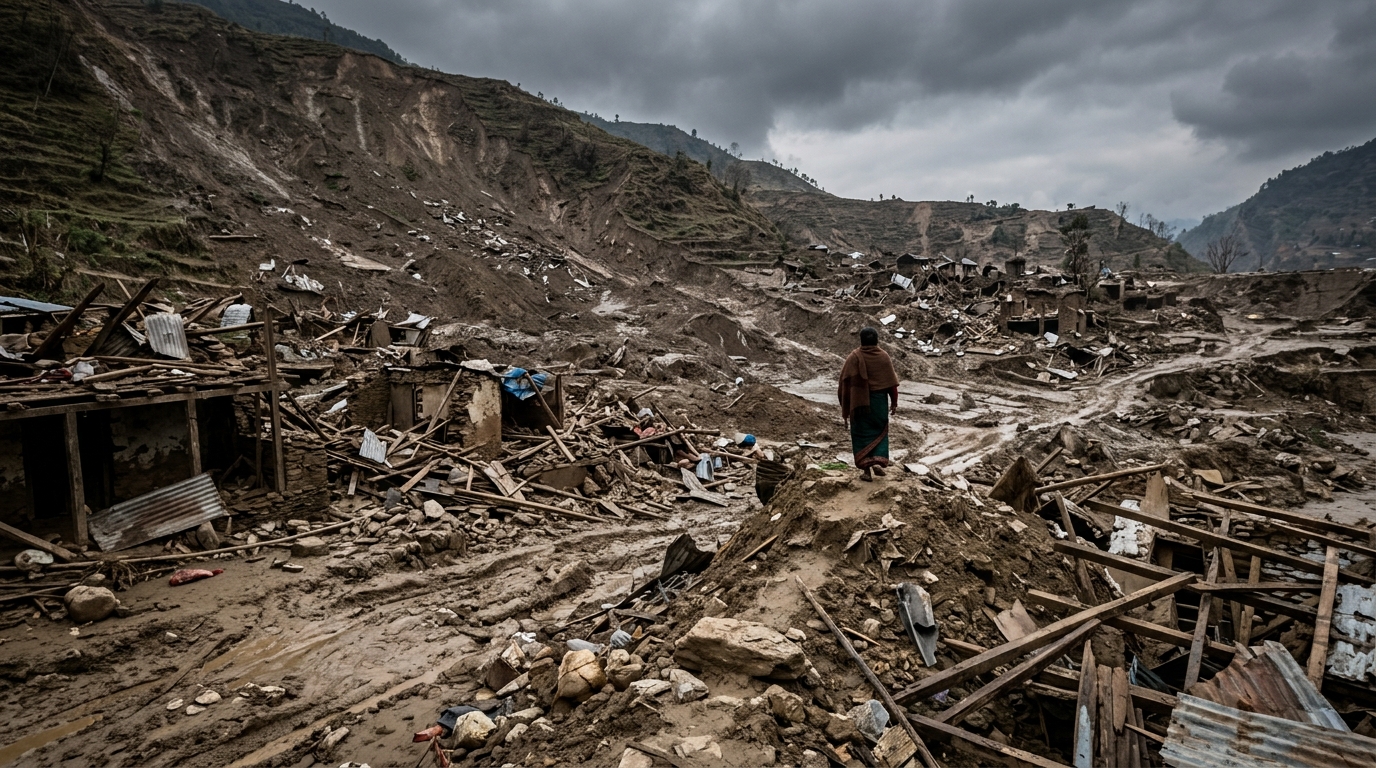
Image is an AI-generated illustration, not a real photograph.
Nepal is currently grappling with the devastating aftermath of catastrophic flash floods that struck on August 26, 2026. The disaster, triggered by a partial glacial collapse in Langtang National Park, sent an immense surge of water, ice, rock, and sediment down the Lende Khola and Trishuli River valleys, impacting numerous communities over a 60-mile stretch. As of early September, reports indicate over 1,200 fatalities and thousands more remain missing, with significant destruction to villages, infrastructure, and hydropower projects. The United Nations Development Programme estimates that the floods generated 2.2 million tonnes of debris, further complicating rescue and recovery efforts for the 84,270 people affected across 17 municipalities. UNICEF has highlighted the urgent need for safe drinking water, sanitation, and hygiene support for at least 22,000 children, as damaged water systems increase the risk of disease outbreaks.
Amidst this humanitarian crisis, past decisions by the US administration to cut funding for natural hazard monitoring in the region have drawn renewed scrutiny. Specifically, the termination of the SERVIR-Hindu Kush Himalaya (SERVIR-HKH) program in January 2025 by the Trump administration is now a subject of concern. This program, a joint initiative by NASA, USAID, and the International Centre for Integrated Mountain Development, focused on flood forecasting, early warning systems, and glacial lake monitoring in the Himalayas.
Former USAID officials and aid organizations are suggesting that these funding cuts may have undermined Nepal's capacity for disaster preparedness and its ability to mitigate the impacts of such a catastrophic event. The debate highlights the critical role of sustained international aid for climate resilience and disaster readiness in vulnerable regions like the Himalayas, where rising temperatures are increasing the risk of events like glacial collapses.
What each outlet emphasizes
- CNN: human impact, personal stories, and past US aid cuts
- BBC: regional climate change risks and implications for India
- The Guardian: scale of human suffering, search efforts, and missing persons
- AP: symbolic funerals and contact from some missing tourists
Read it at the source
britannica.com ↗ adventure.com ↗ usgs.gov ↗ thehindu.com ↗ undp.org ↗