Middle East tensions escalate with Strait of Hormuz warning and tanker attacks, impacting global trade
Escalating conflicts in the Middle East, including warnings from Iran's IRGC and tanker attacks, are disrupting critical global trade routes and raising international alarm.
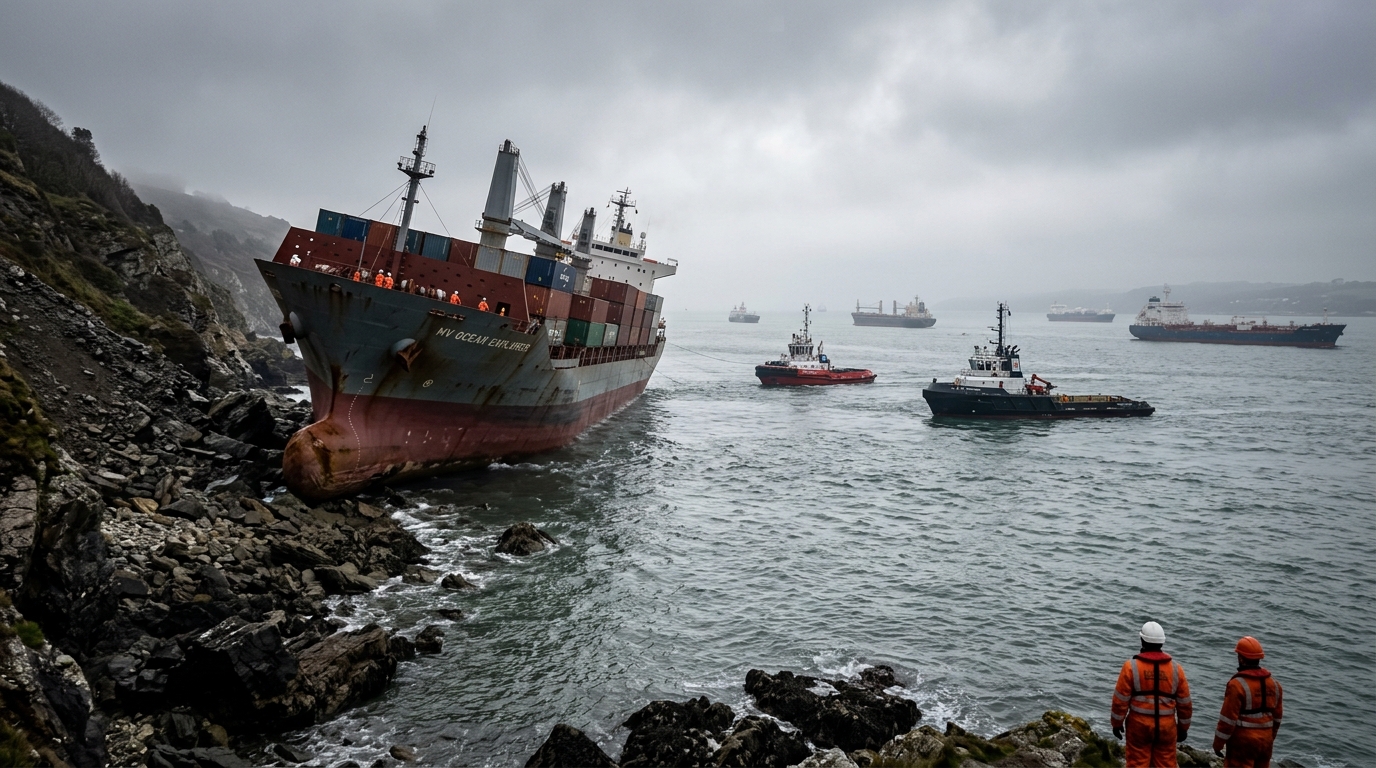
Image is an AI-generated illustration, not a real photograph.
Middle East tensions have significantly escalated, primarily centered on the vital Strait of Hormuz. Since late February 2026, Iran's Islamic Revolutionary Guard Corps (IRGC) has largely blocked shipping through the strait, a critical global trade route, in retaliation for US and Israeli air attacks on Iran. The IRGC has issued stern warnings, attacked merchant vessels, and deployed sea mines, leading to a recent surge in tanker attacks, with at least 23 incidents reported in October alone, including two cargo ships sinking this week.
These escalating conflicts have severely disrupted global trade and energy supplies. The Strait of Hormuz, which previously facilitated a substantial portion of the world's seaborne oil and liquefied natural gas, has seen traffic plummet. Consequently, global oil prices surged to over $100 per barrel, marking the most significant energy supply disruption since the 1970s. The ongoing instability has forced many vessels to reroute around the Cape of Good Hope, significantly extending transit times and increasing freight costs, while the World Trade Organization projects a substantial decline in Middle East trade for 2026.
What each outlet emphasizes
- CNN: highlights global trade route disruptions and how the US-Iran war upended routes
- AJ: emphasizes Iran's IRGC warning about the Strait of Hormuz and reports of tanker hits, alongside Palestinian conflict details
- The Guardian: reports on the UAE re-entering the Yemen conflict and the human cost of the Gaza war
Read it at the source
wikipedia.org ↗ cnn.com ↗ aljazeera.com ↗ cbsnews.com ↗ kvia.com ↗