Trump Declines to Rule Out National Security Emergency for 2026 Election, Eyes Policy Shifts
Former President Trump has sparked controversy by not ruling out declaring a national security emergency to control the 2026 election, while also pushing for changes to birthright citizenship and childhood vaccines.
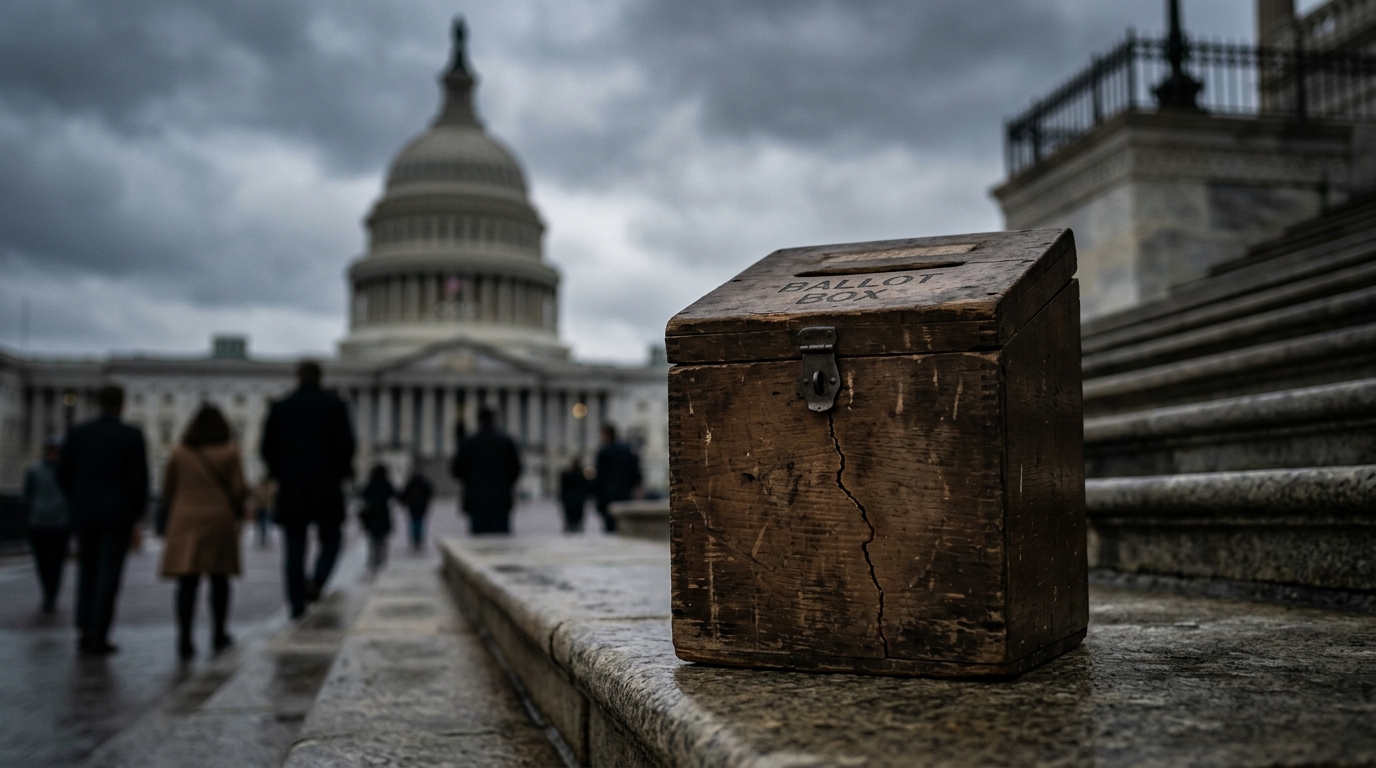
Image is an AI-generated illustration, not a real photograph.
Former President Donald Trump has recently signaled his openness to declaring a national security emergency to influence the 2026 midterm elections, a move that would aim to unilaterally impose voting restrictions such as photo identification requirements and limits on mail-in ballots. This position emerged during an interview where a media host proposed the idea of bypassing Congress to implement such changes, to which Trump responded, "stranger things have happened." Legal experts widely contend that a president lacks the constitutional authority to control elections in this manner, emphasizing that such an attempt would be both illegal and unconstitutional.
In addition to election-related discussions, Trump has also pursued policy shifts regarding birthright citizenship and childhood vaccines. Following a June Supreme Court decision that rejected an earlier attempt to restrict birthright citizenship, President Trump signed new executive orders in early August. These orders aim to broaden categories of individuals ineligible for automatic U.S. citizenship, specifically targeting those involved in "birth tourism" or whose parents are linked to foreign governments or terrorist organizations. These directives are anticipated to face immediate legal challenges, as the 14th Amendment is largely interpreted as guaranteeing birthright citizenship.
Furthermore, President Trump signed an executive order on August 10, 2026, titled "Delivering Gold Standard Childhood Vaccine Recommendations for Americans." This order seeks to reduce the number of universally recommended childhood vaccines from 18 to 11, advocate for administering vaccines at separate medical visits, and proposes separating the combined measles, mumps, and rubella (MMR) vaccine into individual shots. This action bypasses a prior judicial stay on similar changes and has drawn criticism from public health organizations, including the American Academy of Pediatrics, which argue that these recommendations lack scientific support and could increase health risks. During the signing, Trump also made unsubstantiated claims linking vaccines to autism.
What each outlet emphasizes
- CNN: Trump's comments on a national security emergency for 2026 and the birthright citizenship order
- BBC: fact-checking Trump's claims on vaccines as he rolls back recommendations
- AP: fact-checking Trump's false claims as he signs the vaccine order
Read it at the source
protectdemocracy.org ↗ democracydocket.com ↗ sbs.co.kr ↗ facebook.com ↗ campaignlegal.org ↗