Iran warns US of wider response as oil prices jump amid regional tensions
Iran has warned of wider retaliation after several ships were reportedly hit in the Strait of Hormuz, causing global oil prices to surge to a five-month high amidst escalating US and Israeli strike preparations.
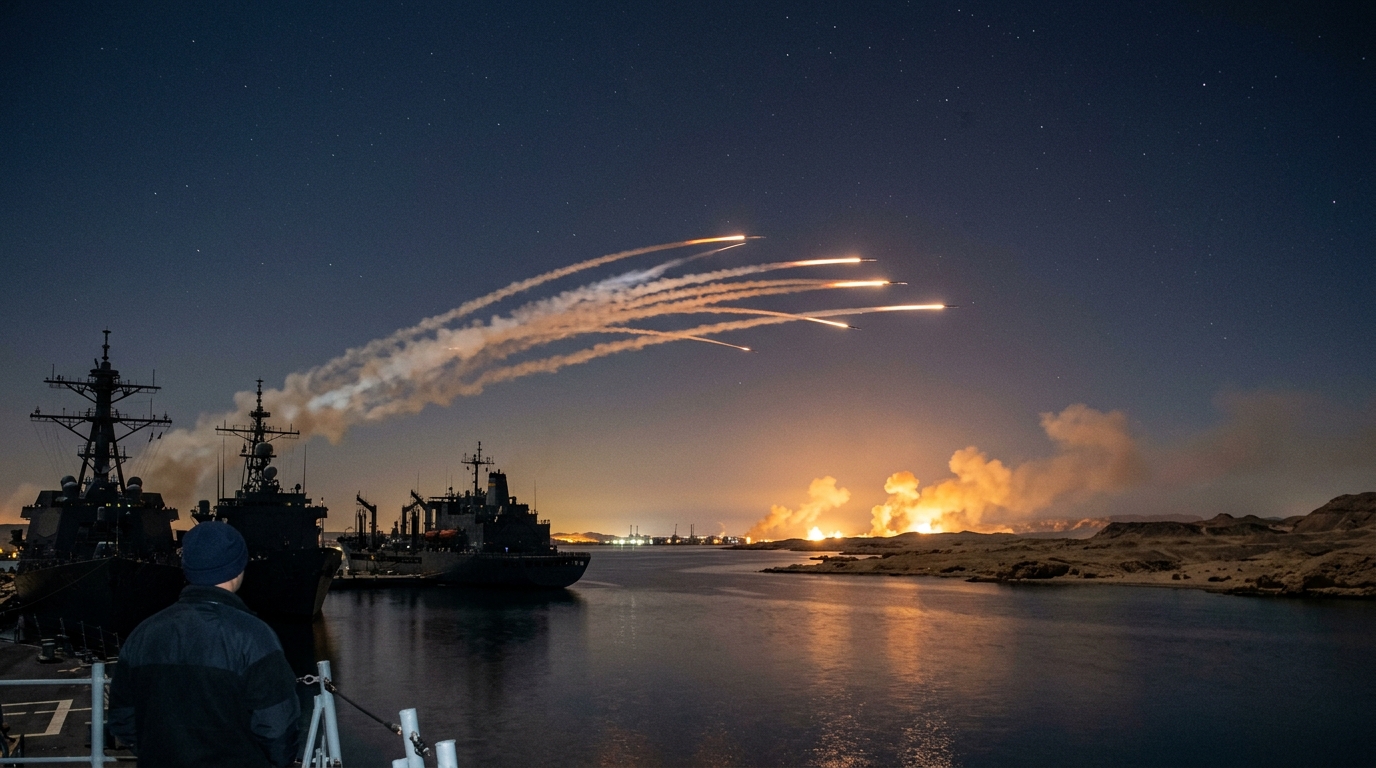
Image is an AI-generated illustration, not a real photograph.
Iran has issued a strong warning, vowing a "crushing response" to any potential attacks amidst heightened tensions with the United States and Israel. This comes as reports indicate ongoing military preparations and threats of renewed strikes against Iran by the US and Israel. Iranian officials have cautioned that any new military action could lead to a more severe and extensive retaliation, potentially targeting regional bases and economic infrastructure in the Gulf.
Concurrently, global oil prices have surged to a five-month high, with Brent crude reaching over $110-$112 per barrel. This spike is directly linked to escalating Middle East tensions, concerns over supply disruptions, and attacks on shipping in critical waterways like the Strait of Hormuz. The ongoing geopolitical instability in the region is significantly impacting the global energy markets.
What each outlet emphasizes
- AJ: Iran says seven ships hit in Hormuz Strait, warns US of wider response
- The Guardian: oil prices jump to five-month high as attacks threaten global supply
- AJ: Iran prepared for imminent US, Israeli strikes
Read it at the source
indiatimes.com ↗ iranintl.com ↗ theguardian.com ↗ newscord.org ↗ iranintl.com ↗