US and Iran sign initial agreement to end war; tougher talks ahead despite claims of victory
The United States and Iran have signed an initial agreement to end their conflict, though both sides present differing views on its implications and further negotiations are anticipated.
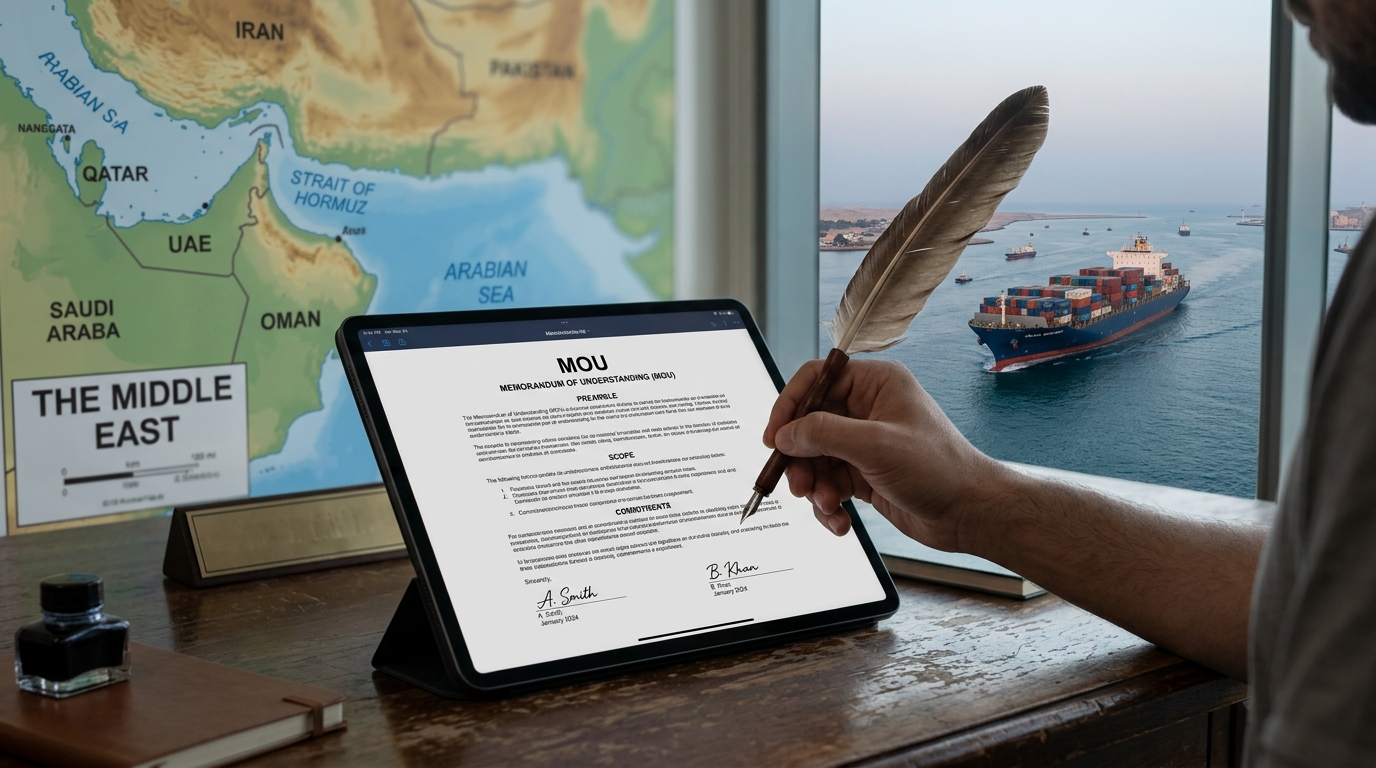
Image is an AI-generated illustration, not a real photograph.
The United States and Iran have recently signed a historic 14-point initial agreement, a memorandum of understanding, aimed at ending their ongoing conflict, easing economic sanctions, and reopening the vital Strait of Hormuz. Signed by President Donald Trump in Versailles on June 17, 2026, the deal immediately allows for waivers on Iranian oil exports and commits to a phased lifting of broader sanctions.
This agreement also outlines plans for a significant $300 billion private fund dedicated to Iran's reconstruction and economic development. While Iran has reaffirmed its commitment against developing nuclear weapons, further negotiations are set to occur within 60 days to address the disposition of its enriched uranium stockpile and other core sticking points for a comprehensive final peace deal. The initial pact, welcomed for its potential to restore regional stability and relieve global energy markets, nonetheless sets the stage for complex future discussions on lasting peace.
What each outlet emphasizes
- CNN: focuses on the signing, the 14-point plan, and Iran's claims of victory vs. deeper problems
- BBC: emphasizes Vance's stance on sanctions, the question of the war's purpose, and Iran's perceived strength post-deal
- AJ: highlights Iran's president hailing the deal, Vance's confidence in lifting sanctions, and the deal's regional implications including Hormuz and Lebanon
- The Guardian: reports on the US retreat since 2025 and the mixed reactions to Trump's deal
- AP: provides access to the transcript of the deal
Read it at the source
washingtonpost.com ↗ youtube.com ↗ indiatimes.com ↗ newsweek.com ↗ militarytimes.com ↗